Research Assistant | ANTENNA Project| Department of Botany
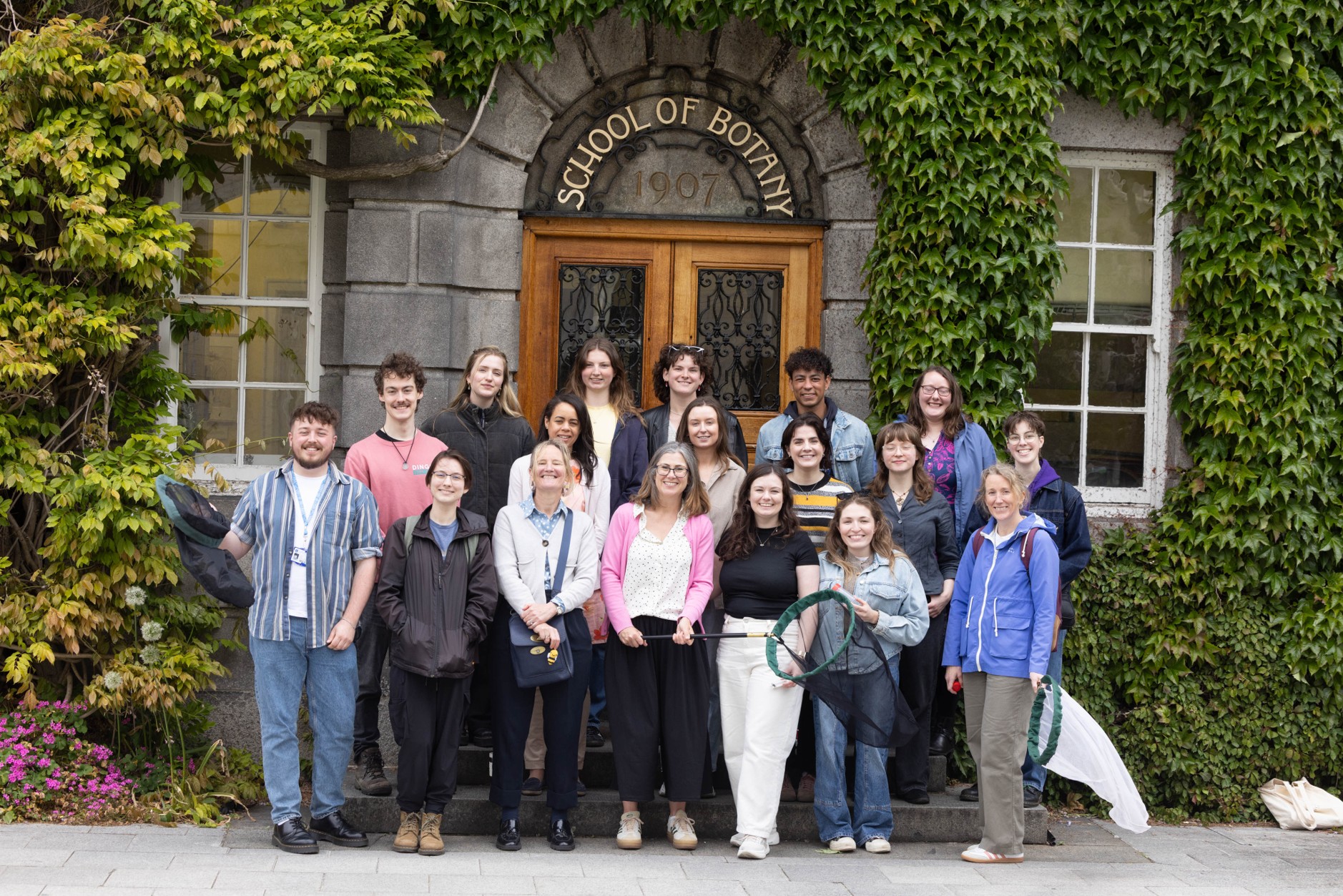
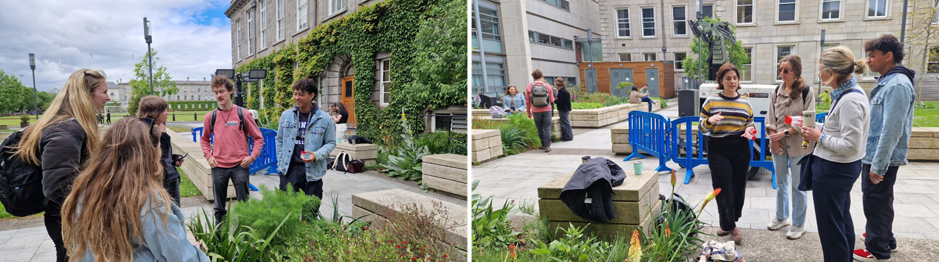
All at Trinity celebrating World Bee Day.
To celebrate World Bee Day 2026, we organised a Pollinator Workshop focusing on the monitoring efforts that are being carried out by researchers at Trinity and the National Biodiversity Centre. Professor. Jane Stout introduced the workshop, emphasising the importance of monitoring pollinators and the collection of data in order to have up to date trends on insect populations. This set the scene for a morning of flash presentations from researchers involved in pollinator monitoring which then led to some interesting discussion surrounding challenges, monitoring gaps and opportunities within monitoring schemes.
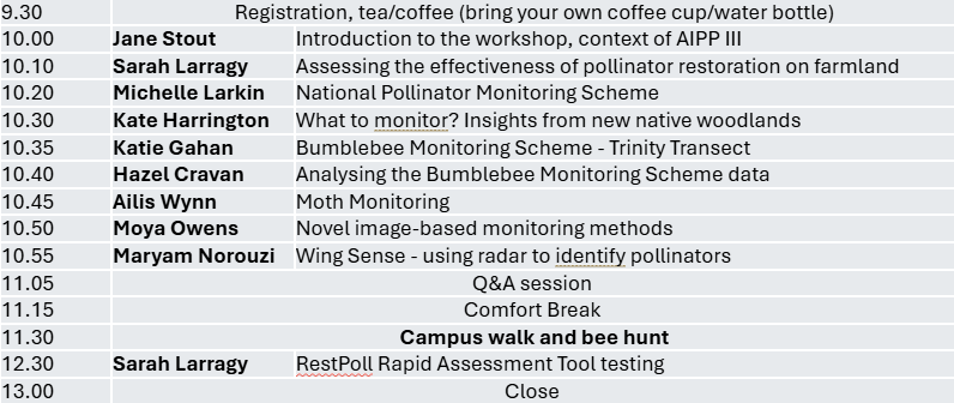
The Days Agenda
” Insects like warm, sunny weather conditions so choosing when to survey is crucial in order to detect insect activity “
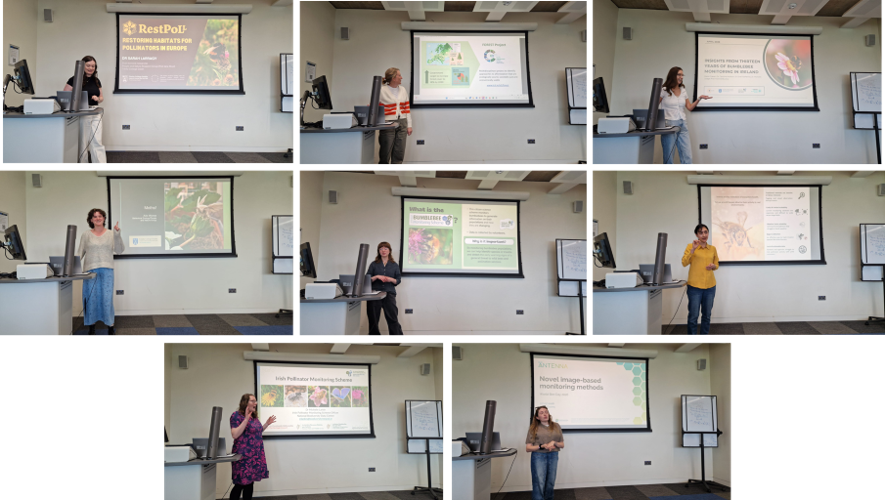
Researchers presenting their projects. L-R: Dr. Sarah Larragy, Dr. Kate Harrington, PhD student Hazel Cravan, Research Masters student Ailis Wynne, MSc student Katie Gahan, Dr. Maryam Morouzi, Dr. Michelle Larkin, Research Assistant Moya Owens
Challenges
One of the main challenges with insect monitoring is surrounding variability – there are so many things to consider before even getting into the field to monitor! Insects are incredibly variable year to year and can be sensitive to environmental stressors which results in population fluctuations. Pesticides, habitat loss and climate change all impact our insect species and negatively impact populations. Additionally, the weather plays a huge role in insect activity and detection. Insects like warm, sunny weather conditions so choosing when to survey is crucial in order to detect insect activity (spoiler alert – Ireland is not the best at giving us sunny, dry weather). There are also gaps within monitoring schemes – monitoring methods don’t capture the whole picture, which is why projects like Wing Sense and ANTENNA can help fill these gaps.
The Future
Novel technologies can capture richness over a wider spatial and temporal scale, improving our data and giving us a better understanding of population trends. We also discussed the new Eu Pollinator Monitoring Scheme (EU-PoMS) which is being rolled out from 2027. Under the Nature Restoration Legislation, all EU member states are required to reverse the decline in pollinators by 2030 – an ambitious task, but a good starting point that will hopefully:
1. Increase awareness surrounding the decline of pollinators and
2. Lead to the implementation of effective measures that will improve pollinator diversity across Europe.
Enjoying learning about bees!
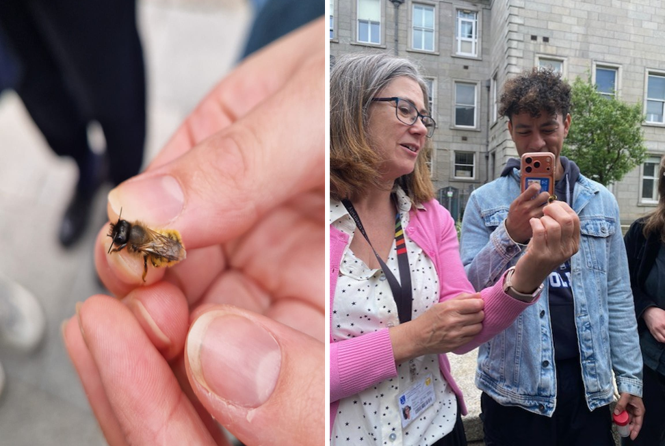
After the presentations and discussions, we took advantage of the dry weather and went on a bee hunt on campus. We found lots of insects flying about – honeybees (Apis mellifera), mining bees (Andrena spp.), white-tailed bees (Bombus lucorum agg.) and early bumblebees (Bombus pratorum). It was a great day celebrating all things bee – until next year!
L: Red mason bee (Osmia bicornis) and R: Jane showing off a male early bumblebee (Bombus pratorum)
Thanks for reading – remember to always think of our small friends!
I’m Rebecca and I’m a new PhD student at Trinity, aiming to assess the impacts of Spartina anglica and opportunities for its management and control.
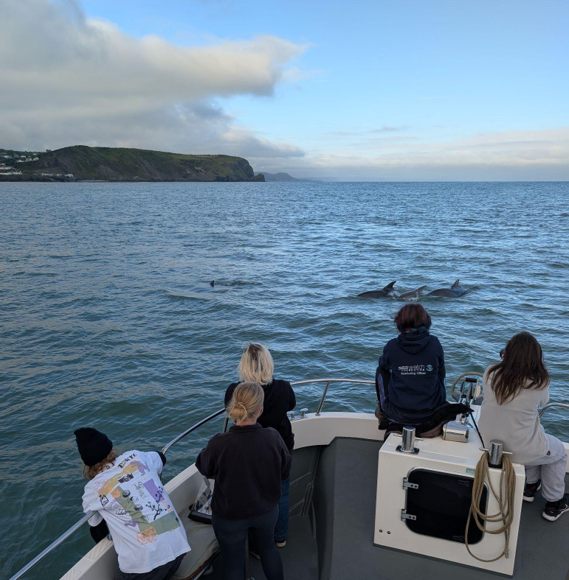
Before starting my PhD, I was the research assistant and intern coordinator for the 2026 season at Sea Watch Foundation (SWF) and coming to the end of my time there, I became the Irish regional co-ordinator. SWF is a national charity working to improve the conservation and protection of whales, dolphins and porpoises in British and Irish waters. The team monitors the numbers and locations of cetaceans in order to gain valuable knowledge of the health of our marine environment, and insight into the effects of chemical pollution, noise disturbance, over-fishing, accidental capture in fishing gear and climate change. The public are hugely involved in the scientific monitoring, across the UK and Irish coastline and provide data to support recording and reporting of all sightings of cetaceans.
The Cardigan Bay Monitoring Project, based in New Quay, Ceredigion, is SWFs flagship field project, monitoring the abundance of bottlenose dolphins in Cardigan Bay, study residency and assess home ranges, estimating birth rates and reporting on the health of individuals. Additionally, members of the public carry out systematic watches across the UK and Ireland to monitor numbers of cetaceans inhabiting the region. This is an effective method to obtain a more accurate national sightings database and to relay sightings to the public.
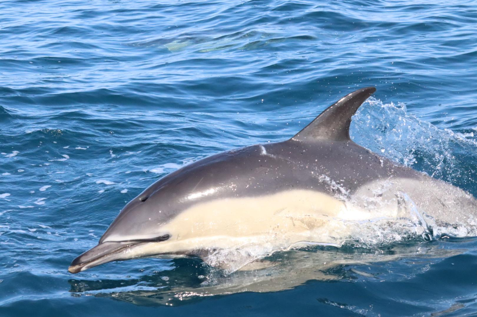
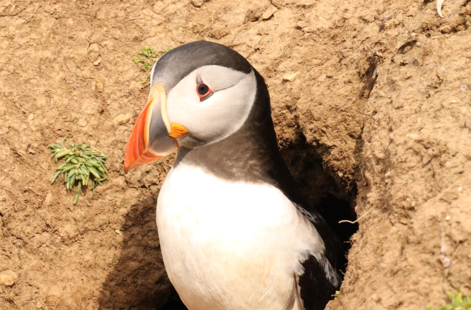
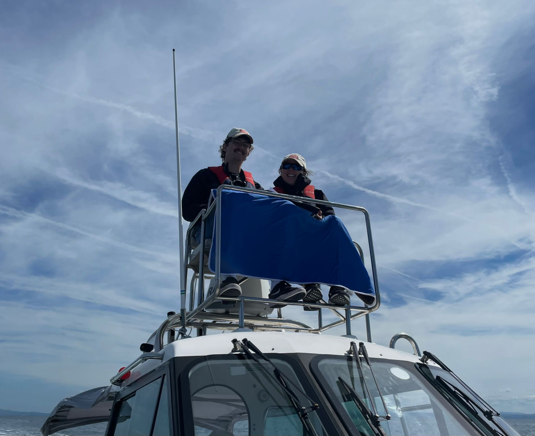
My time at SWF as research assistant embodied many tasks and responsibilities. My favourite part of the job was being able to go out on boat surveys. These surveys involve following a transect line across the Cardigan bay Special Area of Conservation (SAC) and observing for any marine mammal activity. If we encountered bottlenose dolphins, we would photograph their fins, record their behaviours, group dynamics and other vital information. We collate our fin images as a method of identification for individuals. Each dolphin has its own unique notches and rake marks, allowing us to determine who the individual is, whether they have returned to Cardigan bay for the season and if they have any new calves. Other, yet rarer sightings, include Common dolphins (not as common at Bottlenose!), Minke whales and even the odd Risso’s sighting! Alongside these, we also encounter some fantastic pelagic birds, including Puffins and Manx Shearwaters.
One exciting project, led by our acoustic intern Joseph Strutt, focusses on acoustic behaviour and using it as a method of identification. Using hydrophone and go-pro equipment, we were able to record whistles and clicks during our encounters. This data is complemented by the behavioural data we recorded, which can allow us to infer specialised vocalisations during different activities, such as feeding and socialising. Joe’s aim is to find signature whistles of individual dolphins using the open-source software PAMGuard. This method will prove useful, particularly to calf and juvenile dolphins which do not yet have notches or rake marks. Therefore, once a calf no longer associates with its mother, we can easily identify the individual through its signature whistle. Joe collected his data during the 2026 season and is now at the data analysis stage. This exciting project will hopefully revolutionise how we use acoustic data in cetacean research.
An interesting aspect of studying cetaceans is the inter-specific relationships. In April 2025, during my time as a research intern at SWF, a juvenile Common dolphin was killed by four Bottlenose dolphins. It was spotted on one of the boat operator trips, where passengers saw the juvenile being tossed out of the water and thrashed about. It is believed that as waters are warming, Common dolphin numbers are increasing further inshore and the occurrence of both species in the same area is happening more frequently. It is believed that resident Bottlenose dolphins will hunt them as a form of play. So Bottlenose dolphins are not necessarily the charismatic, friendly species we grow up to believe! Studying these species interactions is a very interesting area of research and many gaps are still to be filled.
If you want to contribute to SWF’s research in Ireland, make sure to download the “Sea Watcher” app, where you can report any marine mammal sightings around our coastlines. As regional co-ordinator, I will be organising monthly land based watches, primarily in Dublin, so keep your eyes peeled!
Research assistants (RA) are the backbone to many projects happening inside the departments of Botany and Zoology. Their roles can vary from fieldwork data collection for PhD and Master’s students. Assisting professors in long established or new projects. Working in the labs on varying tasks from robotics, to soil analysis to plant and animal identification. Becoming an RA is also a great stepping stone in between your undergraduate and postgraduate degrees, it give you time to figure out what research you would like to do while gaining valuable skills in academia.
Rebecca from the school of Botany tells gives us an insight into her role as an RA.
Rebecca
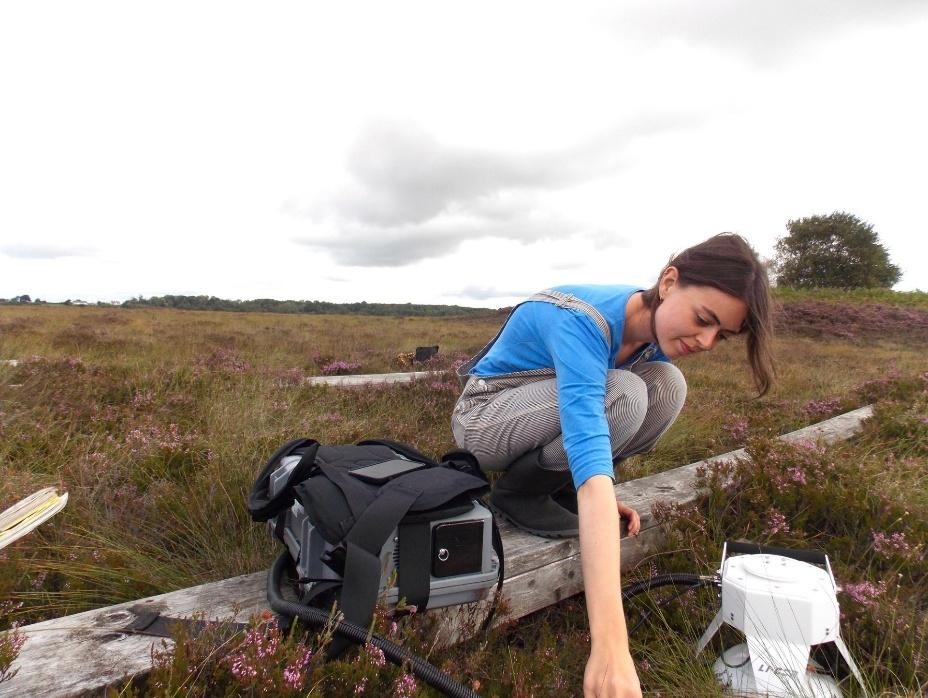
My name is Rebecca and I work as a research assistant under the AIMINGPEAT project in the Department of Botany at Trinity. My role is to collect field and laboratory data that helps us to understand how Irish peatlands store and release greenhouse gases and to provide this data for the project’s modelling work.
I regularly visit three different peatland sites which each represent different peatland conditions and land-use histories. In the field, I use a trace gas analyser and smart chamber to measure carbon dioxide and methane fluxes, and I also record factors such as water level, soil moisture, soil temperature and vegetation type. I also collect peat cores for laboratory analysis where I measure properties such as pH, bulk density and hydraulic conductivity. By bringing together greenhouse gas measurements with information about vegetation, hydrology, soil properties and peatland management, we are working to identify the factors that control emissions and removals. Ultimately, this research will help improve our understanding of Ireland’s peatlands and provide more accurate estimates of their contribution to climate change while also supporting better peatland management and restoration.
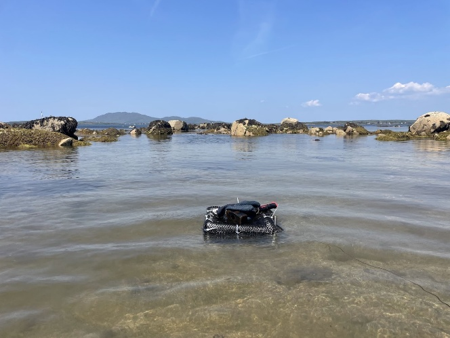
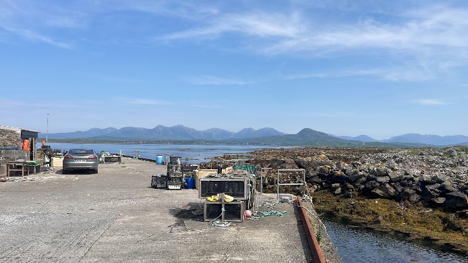
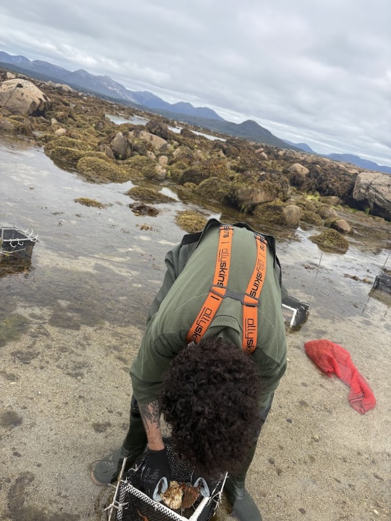
My fieldwork is focused on the species Ostrea edulis, the European flat oyster as part of the BRICONS project (Building Resilient Irish Coastlines through Oyster Restoration). The core aim of this project is to restore O. edulis across Ireland, specifically in Dublin port and Belfast port, as well as to strengthen some of the few remaining wild oyster beds in Bertraghboy Bay and Kilkieran Bay, Co. Galway. In restoring this species, we hope to regain some of the core ecosystem services that have been lost with its decline, such as, increasing biodiversity, restoring wider ecosystem resilience and combating the impacts of climate change. In short, we want to create self-sustaining reefs that can withstand future climate conditions.
Fieldwork in Galway.
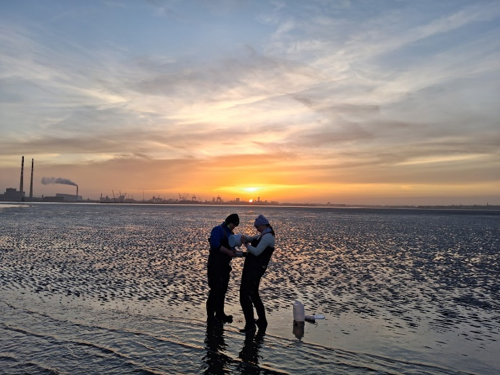
This is where Grace Aspell and my work in Prof Nessa O Connor’s Lab comes in. To build self-sustaining reefs, we need to identify any site-specific stressors that are currently limiting the growth of oyster populations. High predation pressure may negatively affect the formation of self-sustaining reefs through the reduction of biomass, spat and juvenile density. This past summer through our fieldwork we aimed to identify and quantify the effects of predation on spat and adult O. edulis at restoration sites as well as investigate the ecosystem engineering effects of this species on benthic-pelagic structure and community composition. In May 2026, using transplanted oysters from Tralee Bay we have deployed O. edulis individuals as well as oyster clutch in predator exclusion (cage) and open (no cage) treatments here in Dublin port. These cages are anchored to the sediment using 1m long steel stakes hammered into the sediment (myself and Grace are very grateful to all our volunteers here). This experiment was replicated in Bertraghboy bay using oysters gathered from the wild population persisting there.
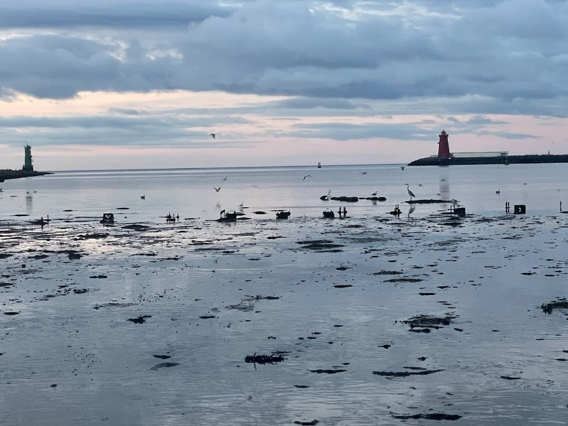
Fieldwork at Dublin port.
O. edulis typically resides in the subtidal or in the low intertidal zone and our study sites are positioned so that they are only accessible during low spring tides. This means we only have access to the sites for roughly 2 hours a day for around 4 days a month during spring, summer and autumn months. Given these tidal constraints we must work through any conditions present on the day (as long as they are not life threatening of course). Good planning is essential to get the most out of these windows and to make sure we are at each site at the correct time and ready to go. In Dublin port our low tides typically peak between 7:00 – 8:00am where we arrive to the site 2 hours beforehand to be ready to work as soon as our oysters and cages are exposed out of the water. Our first task is to measure environmental variables at each experimental plot as the tide is going out using our YSI Exo Sonde 2 probe, measuring temperature, salinity, pH, oxygen, chlorophyll concentration and more. Once the probe has been safely cleaned and put away, we then inspect each experimental plot, opening and resecuring all cages, counting mortalities (which have been quite high, potentially thanks to this summer’s heatwaves boiling the ocean). We continue with an investigation for any spat settlement on the oysters, measurement of seaweed fouling and cleaning the cages (algae blooms in Dublin port have made these more aggressive cleanings then anticipated) and finally making sure everything is secured before moving on!
Next steps involve driving across the country to Bertraghboy Bay to repeat everything the next day 😊
Hi, I’m Niamh! It’s been 11 months since I defended my PhD, and that time has absolutely flown. After almost ten years of studying, I knew I needed a proper break, even if I wasn’t quite sure what would come next.
During my PhD, supervised by Pepijn Luijckx, I investigated how extreme thermal variation (specifically heatwaves and cold snaps) affects host–parasite interactions. In the lab, we used the freshwater invertebrate Daphnia magna and its parasite Ordospora colligata. This system allowed me to run large-scale experimental work without lengthy ethics approval, which was a huge practical advantage.
So, what did I find?
Overall, my work showed that short-term temperature extremes can have effects that are very different from changes in average temperature alone. In particular:
Thermal variation can produce infection outcomes that would not be predicted from mean temperature alone
Heatwaves and cold snaps are not equivalent; they generate distinct effects on infection
The amplitude and duration of a thermal pulse both influence disease outcomes
The timing of a thermal event relative to infection is critical in shaping parasite success
So, what have I been doing since finishing?
I was very lucky to work as a Teaching Fellow in the Zoology Department at Trinity College Dublin during the first semester of the academic year. I took over Ian Donohue’s role in Fundamentals of Ecology, delivering lectures, running practicals, and grading (a lot of) coursework. My first lecture was just three days after my viva, so I really jumped straight in, but it was an incredibly rewarding experience. I got to really appreciate how much work goes into coordinating a module!
I still remember sitting in that same lecture theatre as a student back in 2017, so teaching the module felt like a real full-circle moment. That experience made me realise that academia is a career path I’d genuinely love to pursue.
Since Christmas, I’ve been trying to take things a bit more slowly, though switching my brain off has never been my strong suit. I’ve been channelling that energy into revising and submitting the final unpublished chapters from my thesis. As anyone who’s been through it knows, preparing a manuscript for submission involves a lot of editing, especially when every journal has its own formatting rules. Alongside this, I’m also planning to write new papers based on other projects I’ve been involved in.
Looking ahead, I’m hoping to apply for postdoctoral positions later this year, so getting these papers out feels like an important step. In the meantime, I find myself newly unemployed and occasionally bored, so if anyone has a short-term project or needs an extra pair of hands, feel free to get in touch!
2nd year PhD Student in Botany. Carbon dioxide tracker and nature adventurer.
Hi, I’m Eleanor, and I am currently studying in Dr. Matthew Saunders plant ecophysiology lab. I look at carbon budgets in managed grassland systems on mineral soils in Ireland. Essentially I look at how much carbon dioxide is being released or sequestered and stored in animal agricultural systems in Ireland.
I would describe myself more as an environmental scientist than a botanist – but I am slowly getting better at my plant identifications. I love the intricacies of science communication. How do you tell people about this complicated niche piece of work you dedicate all your time to and get them to care? I think the art of storytelling in science should be utilised a little more. We all have that story of how we knew we wanted to become a scientists, that moment of this is what I’d love to do.
To be curious is to be a scientist. I hope by taking on a role as editor on this blog I can help you share you passions, ideas, theories, findings and maybe even just excited ramblings on something cool.
By Ryan Brennan (Research Assistant in Botany and lichen enthusiast)
rybrenna@tcd.ie.
My first ever encounter with the Lilliputian world of lichens was when I was around fourteen years old. Our biology class was covering the binomial system of naming organisms. The lesson began with differentiating kingdoms and working our way down to species. I remember raising my hand to ask my teacher a question that my immature self treated as a “gotcha”, while also making myself look smart. I asked something along the lines of: “What about lichen? Aren’t they one thing made up of two species? How can they fit into this system?”.
The question was not an original thought. The night before, I had watched Sheldon Cooper make some strange joke about lichens on The Big Bang Theory (note: the author does not think The Big Bang Theory is a good show, and prides himself on his now immaculate taste in media). My teacher hastily googled the answer, told me that lichen was a fungus, and I promptly forgot about lichens for another seven years. For most people, this is roughly the amount of headspace lichens will ever occupy. A fleeting thought about whether the apple tree in the garden is dying because of the weird stuff on its bark. A moment of concern over whether that stain on the wall is bird poo they would rather not sit on.
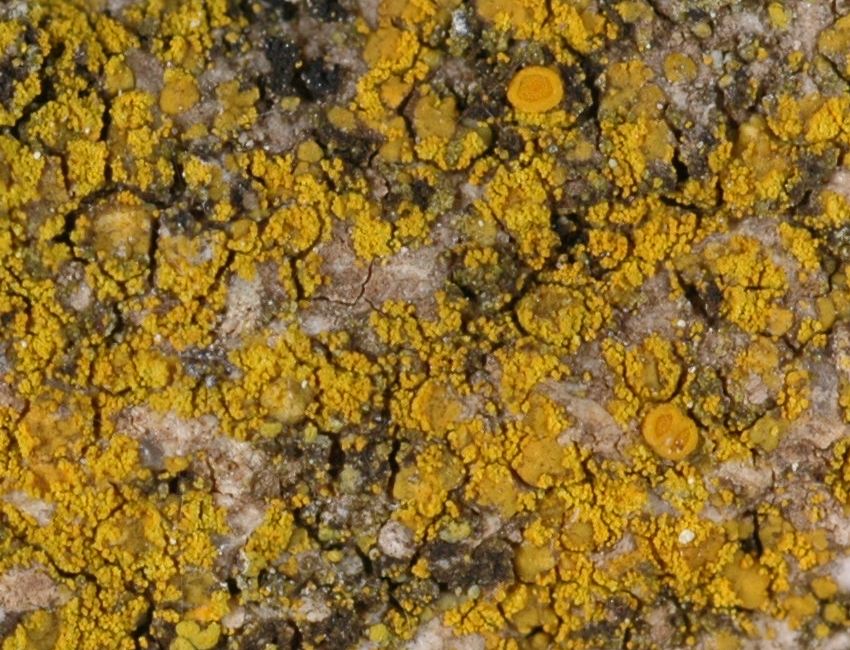
But occasionally, unfortunately in moments few and far between, people investigate further and realise what they are looking at, is a lichen. Then they notice a smidge of Xanthoria on the rubber seal of their car door. They realise the white and grey spots on the concrete path are in fact not chewing gum ironed into the ground by countless shoes. Soon, they can’t stop. They see lichens everywhere, and, importantly, begin to notice their absence.
This absence is not accidental. Lichens are remarkably tolerant of cold, desiccation, and starvation, even being able to survive attached to a space shuttle bound for the International Space Station. They lack roots, cuticles, and any meaningful control over what they absorb from the atmosphere. Everything they need, and everything that harms them, arrives dissolved in rainwater or drifting invisibly through the air, making them a barometer for environmental change.
This sensitivity has earned them a reputation as biological indicators, although this label often undersells their role. Lichens do not simply signal change, they record it. Shifts in species composition, growth form, and abundance accumulate over years and decades, quietly tracking alterations in air quality, nutrient inputs, and climate. When nitrogen-tolerant species spread across bark and stone, they reflect not only pollution, but a reorganisation of ecological opportunity. When communities disappear entirely, the absence itself becomes the message.
Despite this, lichens remain taxonomic outsiders. They are often introduced as curiosities, mentioned briefly in lectures on fungi or algae before being set aside. This marginalisation is not because they are unimportant, but frequently because they are inconvenient. Lichens complicate neat biological categories and challenge the idea of organisms as discrete, self-contained units. To take them seriously requires an acceptance of complexity and interdependence that is easy to acknowledge in theory, but harder to accommodate in practice.
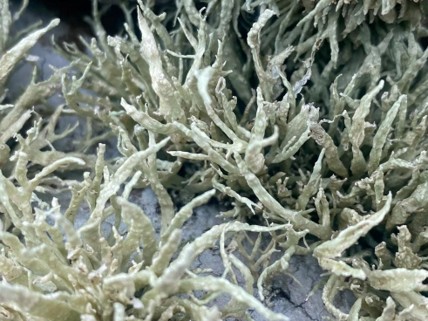
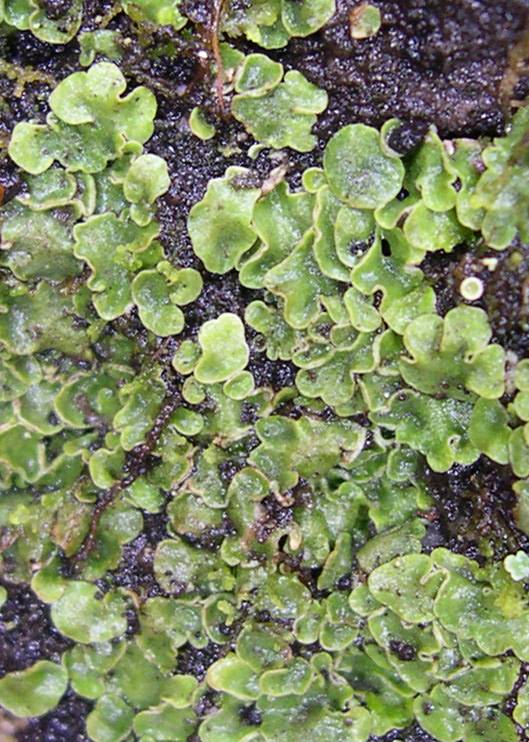
Picture from British Lichens
Yet still, lichens are among the most persistent witnesses on the planet. Many grow slowly enough that a single thallus may span decades or centuries. They endure on rock faces, tree trunks, and walls long after other organisms have come and gone. In doing so, they integrate environmental conditions over time, bearing silent testimony to both stability and disturbance. Where rapid change favours short-lived species, lichens remain: absorbing, responding, and recording.
Perhaps this is why noticing lichens alters how landscapes are read. Pavements and walls become chronologies rather than backdrops. Trees become living records of atmospheric history. Clean air becomes visible, and polluted air leaves a biological trace. Lichens do not demand attention, but once seen, they are difficult to ignore. In a world defined by accelerating change, lichens offer a different perspective. They do not react loudly or dramatically. They persist, adjust, or vanish, and in doing so they tell a quiet, cumulative story about the planet we are shaping. All that is required of us is to learn how to listen.
Ireland was once home to a strong and internationally respected community of lichenologists. This is not immediately obvious today, given how rarely lichens appear in contemporary botanical discourse, but for much of the late nineteenth and early twentieth centuries the island was an important centre for lichen study. Its mild, humid climate and relative lack of industrialisation produced landscapes rich in epiphytic and saxicolous species, drawing the attention of specialists from Ireland and beyond.
Picture from British Lichens
Among the most significant figures in this tradition was Matilda Knowles, whose work laid much of the foundation for modern Irish lichenology. Knowles was meticulous, wide-ranging in her surveys, and deeply committed to recording the lichen flora of Ireland at a time when such work was neither fashionable nor well supported. Her collections and publications documented species distributions that, in many cases, no longer exist in the same form today. Knowles was not working in isolation. She was part of a broader network of naturalists who treated lichens as worthy of serious attention, contributing to floras, herbaria, and field clubs. This community understood that lichens were not marginal organisms, but integral components of Ireland’s landscapes. That tradition, however, has steadily eroded.
In the decades that followed, lichenology in Ireland began to dwindle. The reasons are not unique to lichens. Increasing specialisation, shrinking taxonomic training, and the prioritisation of more economically visible organisms have all played a role. Lichens are slow to study, difficult to identify, and resistant to quick results. They do not fit neatly into grant cycles or undergraduate syllabi. As expertise retired or passed on, it was rarely replaced. The consequence of this decline is not merely academic.
Without people trained to recognise and record lichens, changes in their communities often go unnoticed. In a country where air quality, land use, and climate are all shifting, this represents a blind spot in our understanding of environmental change.
Yet the tools to reverse this are modest. Lichenology does not require expensive equipment or remote field sites. It begins with attention. With looking closely at tree bark, stone walls, roofs, and pavements. With learning a handful of common genera, then a few species, and allowing curiosity to do the rest. This was how earlier lichenologists began, and it remains how most expertise is built. There is also something quietly radical about noticing lichens. It is an act that resists speed and spectacle. It asks for patience, for familiarity with place, and for an acceptance that meaningful change is often gradual.
If lichens are the heralds of an ever-changing planet, then we must decide if they are held up high enough to be heard, their story continuing to be recorded either way. Ireland’s landscapes still carry their stories, written in grey crusts, leafy rosettes, and orange stains on stone. The challenge now is not to rediscover lichens, but to remember that they were always here, waiting to be seen.
If you are curious to learn more about lichen, please let me know! Just beware that I may not stop talking about them once I start. Feel free to stop me to chat whenever you see me or send me an email at rybrenna@tcd.ie.
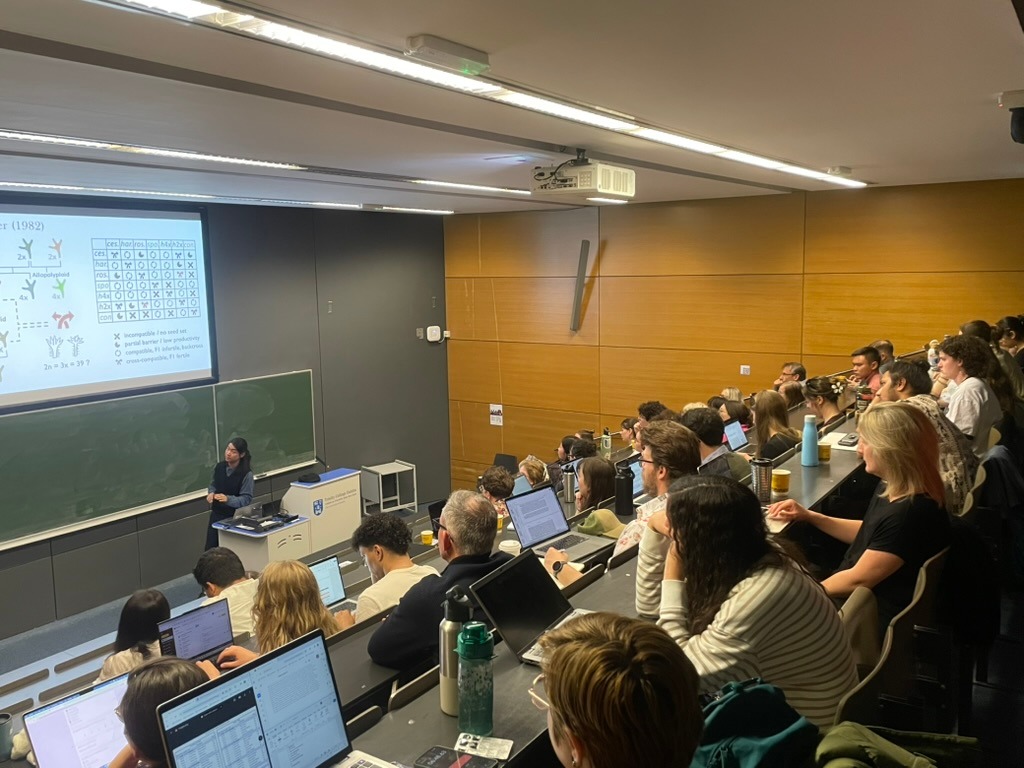
And we’re finishing off the academic term with our annual botany and zoology symposium.
This year we had topics ranging from the shift in plant chemistry, to the impact of artificial light on nocturnal pollinators. With 34 presenters, we had a jam packed audience over the two days. First year students presented for five minutes with everyone else for ten minutes.
The importance of showcasing our research as postgraduate students cannot be highlighted enough. It provides the opportunity to bring together postgraduate research (PGR) within and across departments.
An attentive audience in the Maxwell!
Research can often be a solo pursuit as we venture down the rabbit hole on root dynamics or the mechanics of tendons. It is good to remind ourselves that other people are just as fanatic as we are and to share our research passions with others.
Dr. Matthew Saunders, head of the School of Natural Sciences, said of the symposium:
“…the symposium is a great way to showcase all the fantastic work our PGR are doing. It represents a wonderful opportunity to explore and enjoy the diversity of research across the school. This highlights the need for continued cross departmental collaboration, and not be siloed into our research groups. The standard of research was fantastic to see and I am excited for the new research coming out in SNS”.
We were extremely lucky to have two esteemed guest speakers. On day one, Dr. Martin Möllhoff from the Dublin Institute for Advanced Studies spoke to us on using ground vibrations to track Fin Whales in Ireland and beyond, merging geoscience and marine mammal research. The engaging talk stirred up much conversation about using techniques from one field to study another, and with beautiful videos of Fin whales, what was not to like!
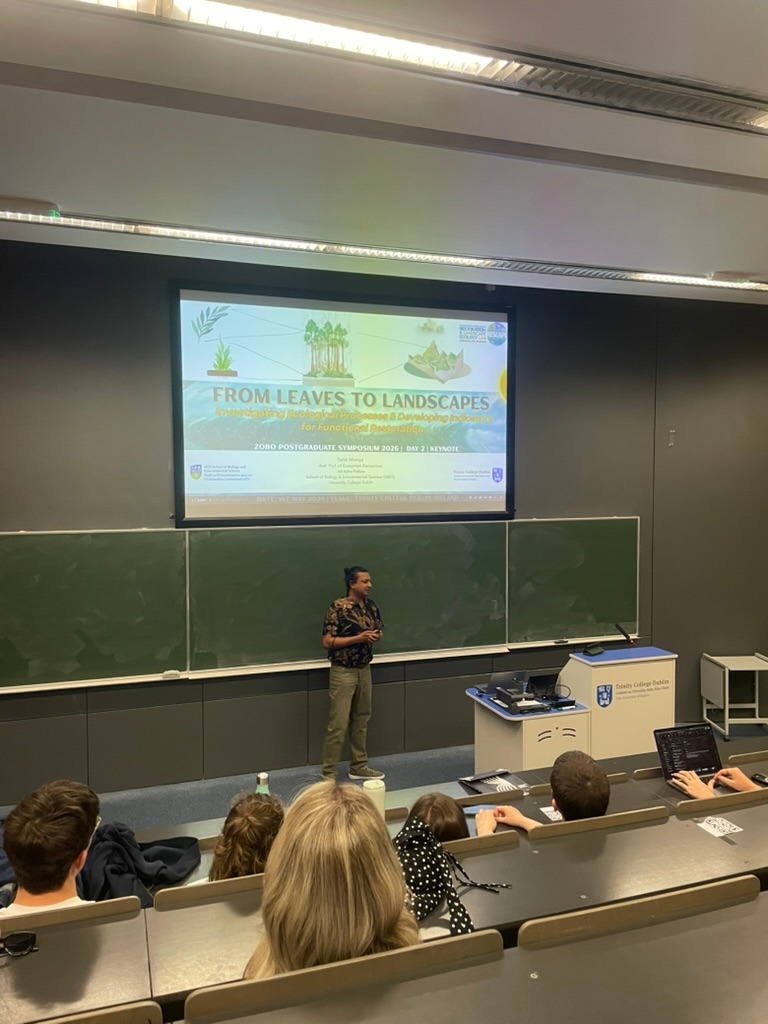
Assistant Professor Sate Ahmad (UCD) presented on day two, investigating ecological processes and developing indicators for functional restoration on fens in Ireland. Botany is well known for being full of bog lovers and Sate’s lively talk presented fantastic in depth knowledge into these systems, which can help shape many PG’s research in the future.
Sate Ahmad presenting his work on ecological restoration.
As a second year PhD (Eleanor), and my first symposium it was great to see the wide depth and breadth of research even within Botany and Zoology, and to get to see new faces and what they are up to. It provides not only an opportunity to work together and connect with fellow researchers but to pick up tips on how they are approaching a problem, and how they are presenting their topic to others. It’s extremely valuable and a lot of fun to take a few days away from the computer!
I’m in my first year PhD (Aoife), and it was really encouraging to see the wide range of research we’re all doing to solve different environmental problems and understand plant and animal dynamics. The presentations were extremely interesting, along with stimulating questions and discussions to follow. The symposium also really highlighted the potential for collaboration in a lot of our projects, and I hope we continue to connect over the next few years!
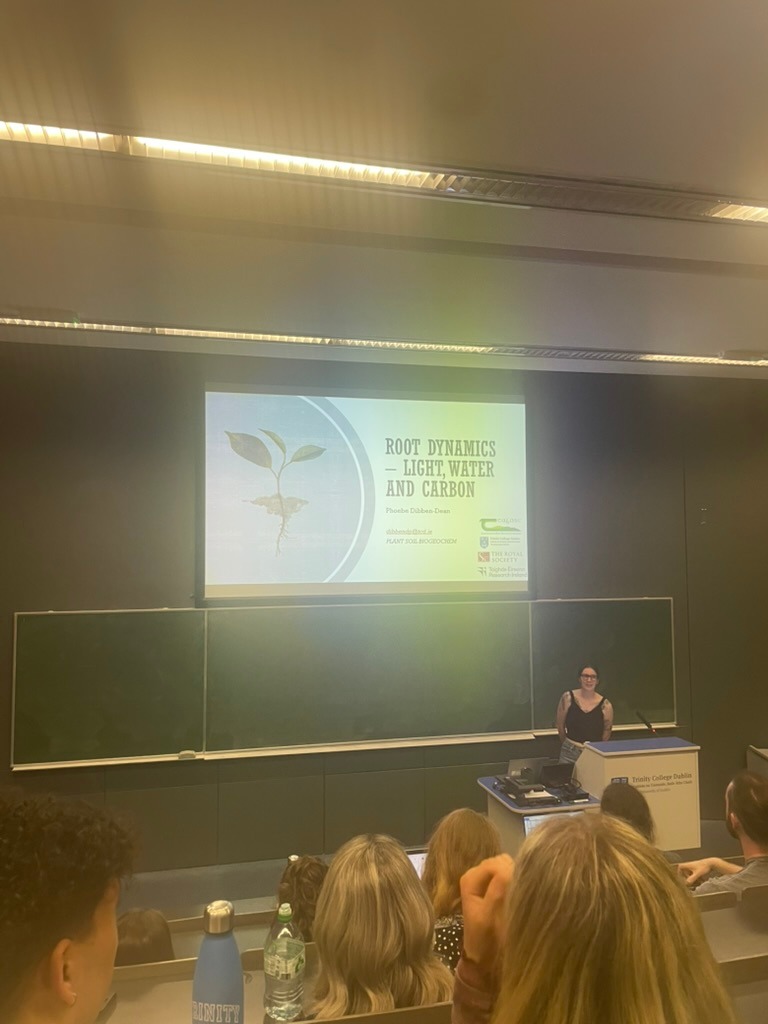
Phoebe Dibben-Dean presenting research on light responses in roots.
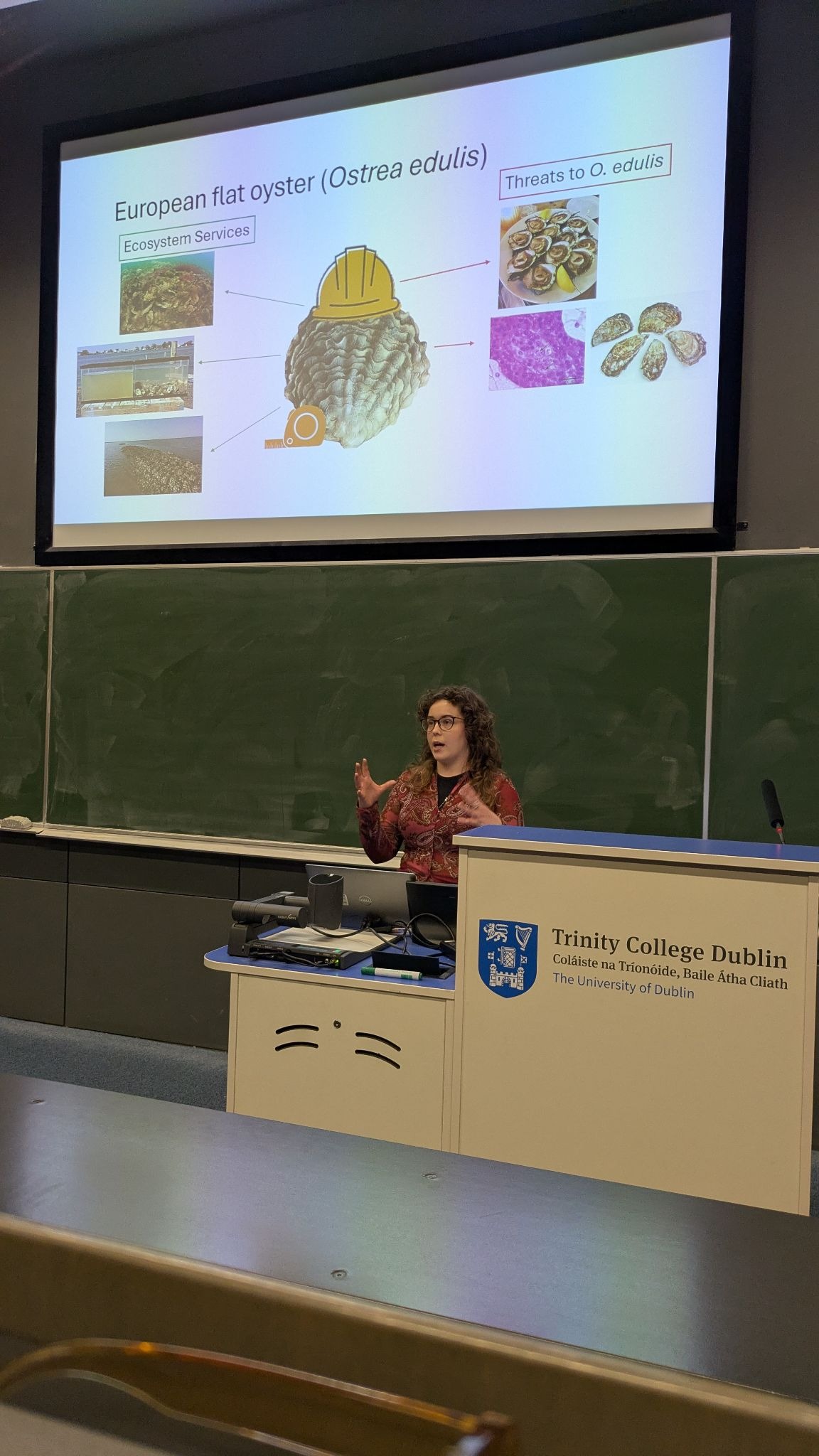
Grace Aspell discussing the findings of multiple stressors on native oysters.
Congratulations to our winners for this year’s symposium:
5-minute presentation: Hazel Craven
10-minute presentation: Emily Symington
Overall presentation: Grace Aspell
Massive thanks to our organisers, fellow PGR students Ailis Wynne, Clodagh Moriarty, Faolán Doecke Launders, and Sorcha Hennigan for organising this year’s symposium which is no easy feat around TCD’s busy schedules. Already looking forward to next year!
After a short hiatus, EcoEvo will be back up and running for the next year. Firstly, a massive thank you to the previous Editors, Dr Niamh McCartan and Josua Seitz! Wishing them the best of luck and we’ll hopefully hear from them in future blog posts.
Aoife
Hi everyone! I’m Aoife Molloy, a first year PhD student within the Buckley Lab in the Zoology Department. I have previously been working here as a Research Assistant, assisting with field and lab work, data management, and policy work.
I am interested in the intersection of climate and biodiversity policy. My current research focuses on how existing evidence can be mobilised to support robust, science-based decision-making in policy and practice. This includes examining nature-based solutions alongside complementary approaches to address pressing societal challenges, particularly in the areas of climate adaptation and mitigation.
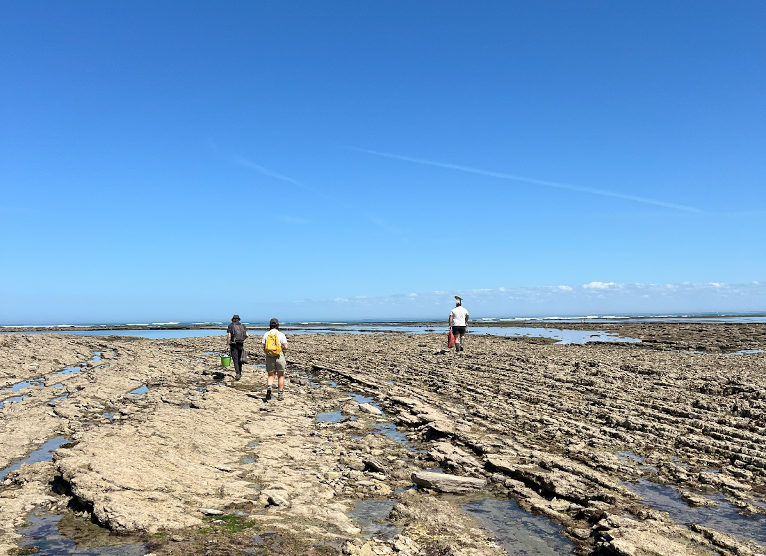
Sometimes you get to travel for your PhD and last week was one of those times for me. This last week I was in France doing fieldwork with my colleague Antonietta Knetge, her co-supervisor Bernard Gomez, and his PhD student Axel Montigny. The purpose of this trip was to collect fossil specimens from Cretaceous localities around Poitiers, from the active quarries of Persac to the beaches of Ile d’Oleron.
Fig. 1: Ile d’Oleron at low tide. Left to Right: Axel, Catarina (me, hi!), and Bernard. Photograph by A. Knetge.
This trip, like all trips, was a learning experience. And everyone loves a list so today we’re counting down the Top 5 things I learned during fieldwork last week.
5. Gear isn’t everything, but it does make a difference
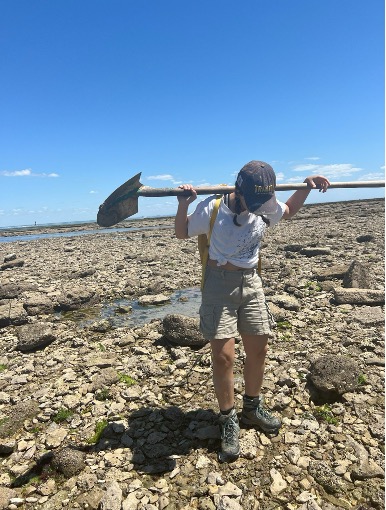
You don’t need to be decked out in Arc’teryx and have the latest in ~geological hammer technology~. However – a solid pair of boots and access to proper tools will absolutely make a difference.
Fig. 2: Drip. Photograph by Antonietta Knetge.
4. Finding Good Rocks is Good Pt.1
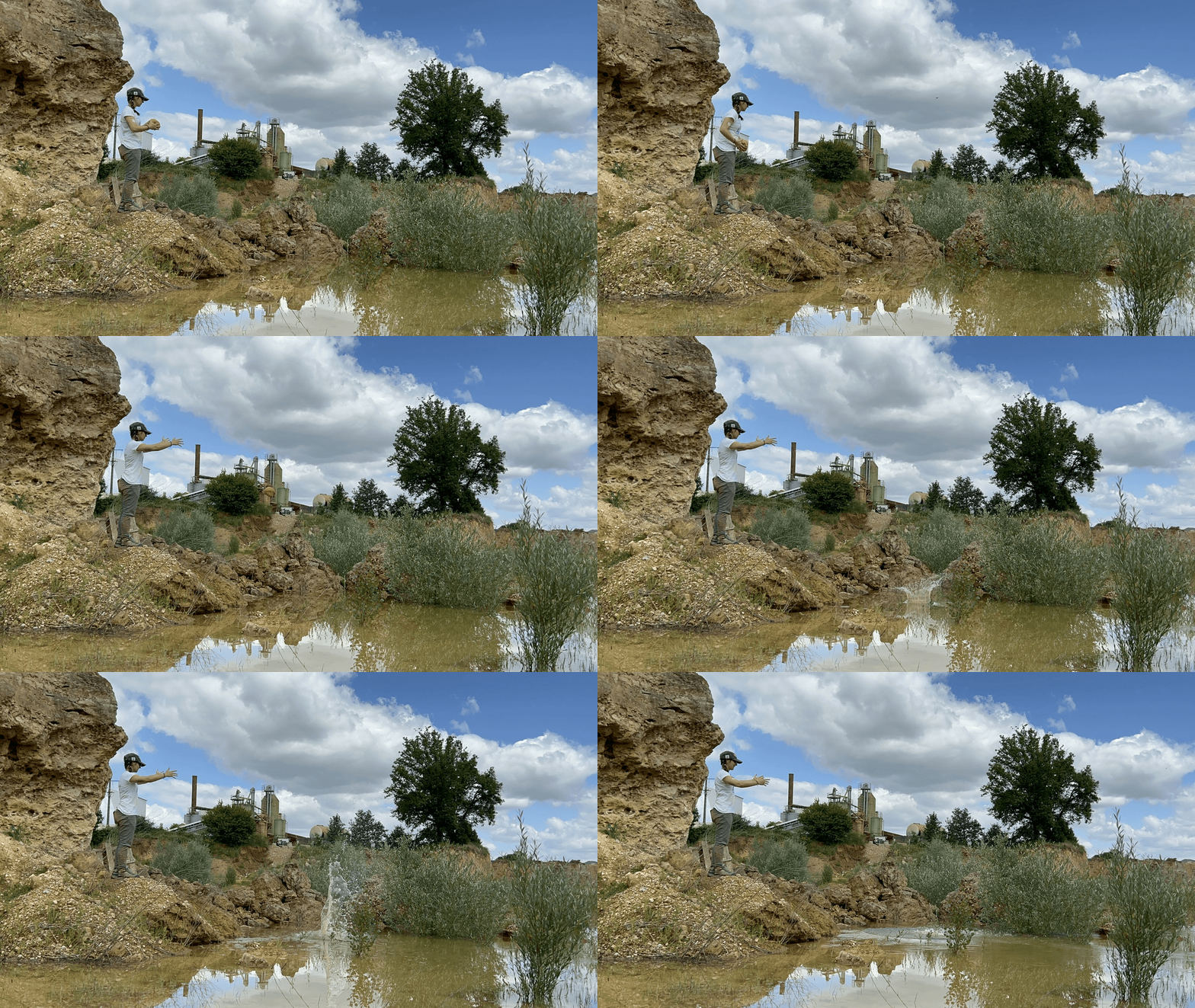
The debate of “Good Rock vs Good Stick” has been ongoing for as long as hominids have had the capacity to debate (citation needed). It can be argued that a good stick is more versatile than a good rock, however, in the presence of a large body of water, a Good Rock reigns supreme. Quarries, especially inactive ones, are usually home to small lakes. And paleontological excavations are known to produce some quantities of big rocks, especially if you’re trying to uncover a specific level. The conditions were perfect. If you ever need to raise morale on a dig, Good Rock Thrown Into Lake is sure to do the trick.
Fig. 3: Good rock found and expertly chucked at the Persac Quarry. Photos by A. Knetge, gif editing by C. Barbosa.
3. Wear sunscreen but most importantly cover yourself
The first time I ever did fieldwork, it was an afternoon in mid-June in Lisbon on a southwest facing cliff. This is to say, it was very very hot and there was no shade whatsoever. I wore a tank top and sunscreen but got a peeling sunburn the shape of the top on my back. This is not ideal. This time, I wore longer sleeves when the weather permitted and always had my shoulders covered. Spent the whole week in the sun, only got a little pink in the forearms the first day. I know it’s obvious, but it really can’t be stressed enough.
2. Nutrition
This is another obvious one but bear with me. Watchers of Dungeon Meshi will be familiar with the importance of balanced, tasty, and warm meals to keep your body healthy and yourself happy, but it really cannot be stressed how much eating well (and enough) will affect your mood. Making sure you’re getting enough water (and also electrolytes!) and enough carbs/protein/fats will keep your eyes and mind sharp and keep you motivated throughout the day. Not enough praise can be said for a hearty, warm meal after a hard day’s work.
1. Finding Good Rocks is Good Pt.2
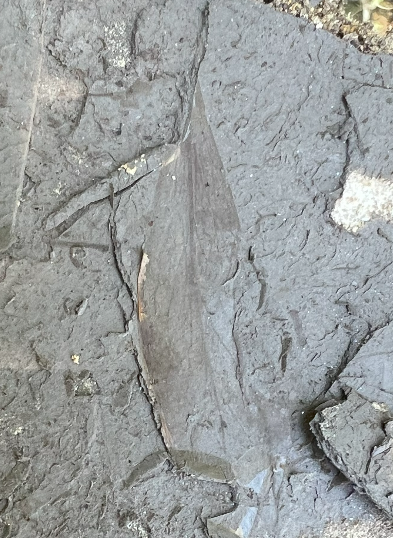
Doing desk work and data analysis is all well and good but nothing beats the rush of cracking open a hunk of clay and finding a perfectly preserved leaf. Venations visible, margins intact, petiole and everything. Effervescent.
Fig. 4: Eucalyptus-like angiosperm leaves from Puy-Puy (Albian-Cenomanian, ~100.5Mya).